
About Us

Cancer research meets health equity

Why BioPolicy exists, and who's behind it.

Hear it from me: who I am and why I started BioPolicy.

My Mission

BioPolicy exists because the biology of disease and the policy that governs who can access treatment for it are almost never taught, or built, together. My academic passions sit at that intersection — neuroscience and cell biology on one side, public policy, humanitarian rights, and socioeconomic inequality on the other. Through my school's biology research program, I study the breast cancer microbiome, using computational analysis of genomic and spatial data to understand how microbial signals and immune cells interact within tumors — work that has shown me just how much biological complexity determines who a treatment actually helps.

That question follows me outside the lab too: watching my grandmother navigate a cancer diagnosis, and my grandfather build a pediatric practice around treating patients regardless of their ability to pay, taught me early that a scientific breakthrough is only as good as the number of people who can reach it. BioPolicy is where I try to hold those two educations together — using what I learn about tumor biology to research, write, and advocate for concrete policy that expands cancer treatment access for low-income families across New York.
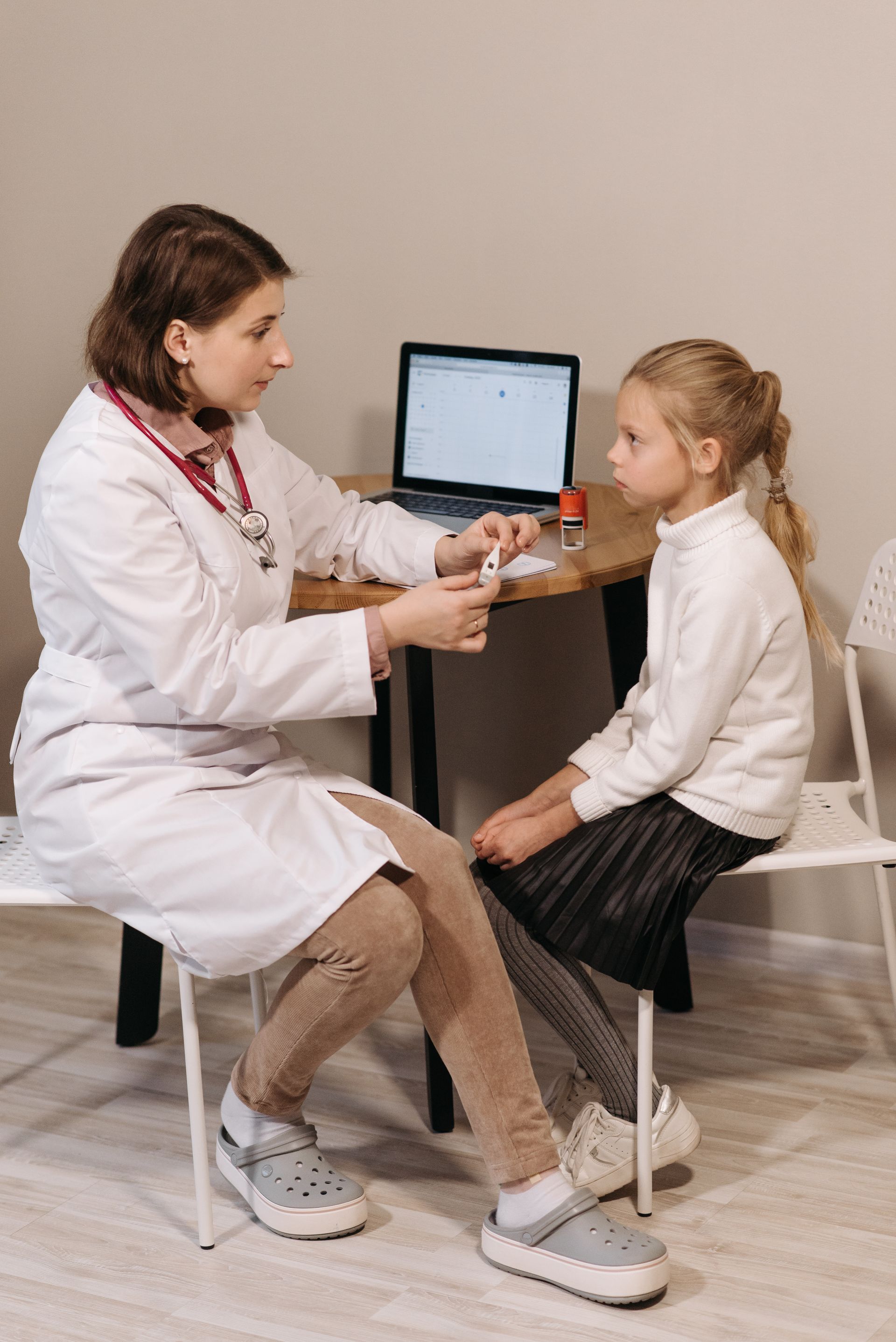
Doctor examining a young patient

My Story

BioPolicy started with two experiences that didn't fit together cleanly at first. In my school's biology research program, I study intratumoral immune and microbial signaling — the kind of insight that could one day shape a more precise treatment. But that insight, on its own, didn't explain why my grandmother's cancer diagnosis played out the way it did, or why my grandfather spent his career as a pediatrician treating patients regardless of whether they could pay. BioPolicy is where those threads meet: real science, pointed at a real access problem.

What Inspires Me

My grandfather's practice. He was a pediatrician who treated patients regardless of their ability to pay, which taught me that access is a choice a healthcare system makes.

Seeing the gap in Peru. Traveling from Lima to the outskirts of Cusco, I saw communities that depended on their crops and traditional remedies while far from the care available in the city. Read more →

Medical Apartheid by Harriet A. Washington. This book, a history of medical experimentation on Black Americans, shed light on how deep and long-standing healthcare disparities are, and it pushed me to treat them as a policy problem, not just a medical one.

About Me

I'm Kamran Hirsa, a rising senior at the Bronx High School of Science in New York City, and the President and Founder of BioPolicy. My academic interests center on neuroscience and cell biology at the intersection of public policy, humanitarian rights, and socioeconomic inequality.

I'm Co-President of my school's Quantum Mechanics Club, where I've hosted workshops on topics including Schrödinger's Cat, quantum superposition, and qubits vs. classical bits. As part of my school's biology research program, I'm conducting research on the breast cancer microbiome — applying computational analysis of genomic and spatial data to study how microbial signals and immune cells interact within breast tumors, and how those interactions may influence immune response, cancer progression, and treatment outcomes.

I'm also a content and proofreading editor for The Science Survey, my school's newspaper, where I photograph and write on student life, culture, current events, news, features, and opinion. In summer 2024, I worked alongside Native communities in Peru through The Global Citizens Program, helping with daily chores and farm work and cultivating crops including potatoes, quinoa, cacao, peanuts, and maize. Read more →

My Approach

I don't just write about cancer research — I connect it directly to policy. Every piece I publish either explains a piece of the science, maps where the access system breaks down, or proposes something concrete to fix it.